The VIPER Technical Attack Chain
The operational flow of a VIPER infection is structured to run silently, prioritizing sustained persistence over immediate, loud activity. Understanding the step-by-step progression of this malware allows enterprise defenders to align their network and endpoint detection controls effectively.
Step 1: Initial Access and Social Engineering
The primary vector for VIPER is social engineering, typically executed through SMS phishing (smishing) campaigns or rogue messaging applications on platforms like WhatsApp. Targets are lured into sideloading custom APK packages disguised as critical banking updates, localized service tools, or essential system patches. These social engineering lures are frequently tailored to match regional institutions, bypassing the security scrutiny of official app repositories.
Step 2: Execution and Persistence Configuration
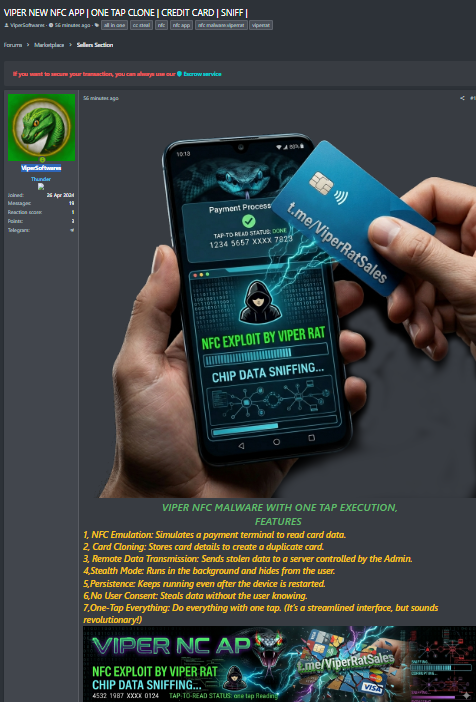
Once the victim manually executes the malicious APK, the application requests standard but highly sensitive permissions, specifically android.permission.NFC and android.permission.RECEIVE_BOOT_COMPLETED. To maintain persistent access, the app registers a background broadcast receiver that listens for the system boot broadcast. This ensures the service initializes automatically upon device restart, running continuously without requiring the user to reopen the visual interface.
Step 3: Stealth Activation and Background Running
To avoid discovery during manual inspections, VIPER instantly hides its launcher icon from the Android application drawer after initialization. The malware functions as a persistent background service, manipulating system alerts and overlays to obscure its execution. By running silently, the app avoids drawing visual attention or triggering standard battery-drain alerts, allowing it to reside on the device undetected for extended periods.
Step 4: NFC Harvesting and Card Cloning
The core capability of the VIPER application lies in its abuse of Android's Host Card Emulation (HCE) and NFC polling APIs. When a physical contactless credit or debit card is brought within physical proximity of the infected mobile device, the malware initiates an unauthorized read operation. It extracts critical Track 1 and Track 2 payment card data, including the Primary Account Number (PAN), cardholder name, and expiration dates. This data is structured and stored locally in an encrypted state, awaiting transmission.
Step 5: Exfiltration to the Attacker Control Panel
At structured intervals, the background service establishes outbound connections to the threat actor's command-and-control infrastructure. Using encrypted HTTP or HTTPS protocols, the gathered financial profiles are exfiltrated directly to a centralized web panel managed by the purchaser. The attacker can then use this data to perform fraudulent online transactions or write the stolen track information onto blank physical cards for direct card cloning.