For GCC enterprises operating complex hybrid infrastructures, the introduction of an accessible, multi-platform administrative toolkit lowers the barrier of entry for cybercriminals. Standard corporate networks often rely on the assumption that macOS and Linux systems require entirely different security postures or are inherently safer than Windows workstations. Toolkits like GhostNet shatter this assumption by standardizing attack flows, allowing a single malware package to target active developers on Linux, corporate executives on macOS, and administrative staff on Windows. To combat this multi-faceted exposure, organizations must actively audit their external boundaries and identify where credentials might already be compromised. Leveraging a comprehensive Dark Web Monitoring strategy is critical to identifying compromised corporate domains before attackers exploit these access points.
Technical Deep Dive: GhostNet Malware Mechanics
The technical architecture of the GhostNet framework relies on modular architecture designed to exploit standard system protocols and bypass traditional network defenses. Unlike older, mono-platform trojans, GhostNet operates using natively compiled binaries tailored for each specific operating system (Portable Executable files for Windows, Executable and Linkable Format files for Linux, and Mach-O binaries for macOS). This enables the adversary to deploy a single operational playbook across an entire corporate fleet once initial access is achieved.
Hidden Virtual Network Computing (HVNC)
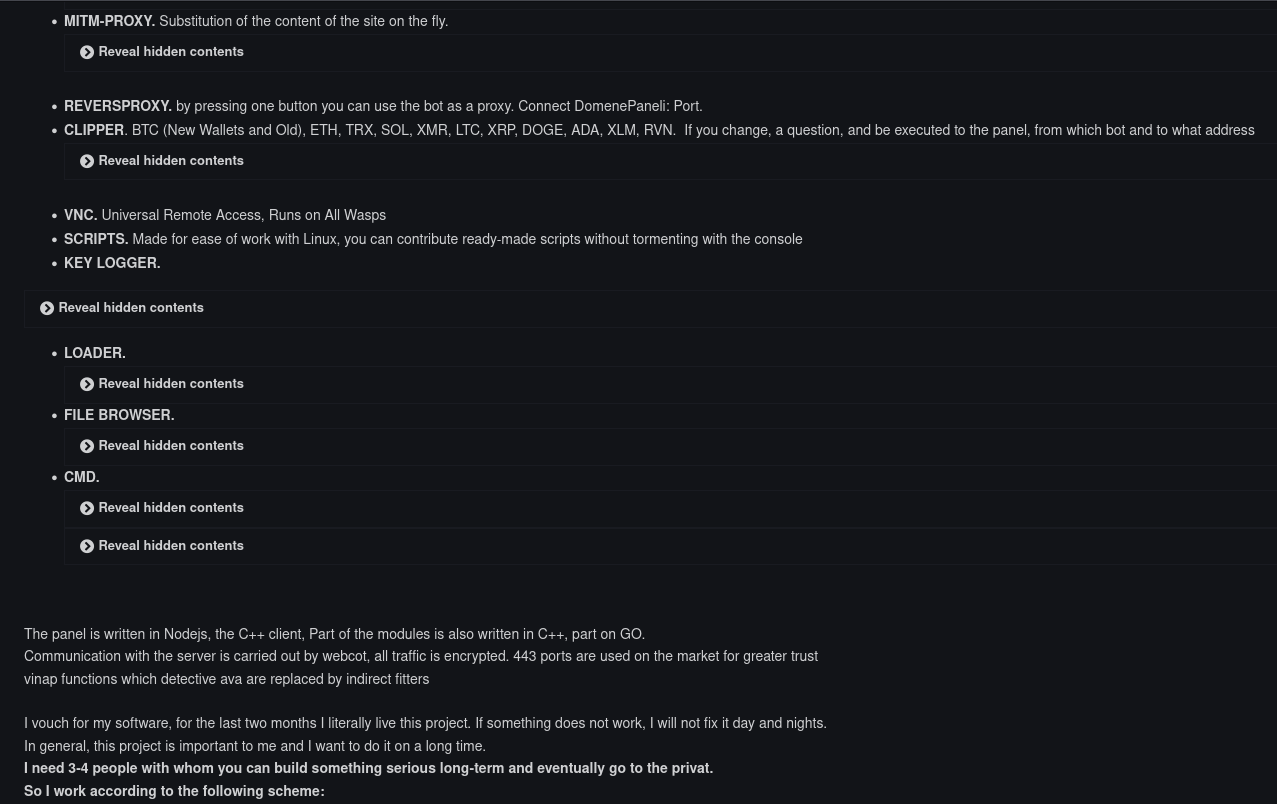
One of the most dangerous capabilities advertised within the GhostNet framework is Hidden Virtual Network Computing. Traditional VNC tools mirror the active user screen, making unauthorized access immediately visible to the operator. GhostNet bypassed this limitation by spawning an invisible virtual desktop session on the targeted host. On Windows systems, this is achieved by leveraging native API calls to create alternative desktop structures and invisible windows, mapping input from the attacker directly to this secondary, unmapped display buffer. This allows the threat actor to open web browsers, navigate file managers, execute local commands, and exfiltrate databases invisibly, even while the legitimate user is actively working on the primary monitor.
Adversary-in-the-Middle (MitM) and SOCKS5 Proxies
The malware incorporates sophisticated network manipulation modules, specifically a local proxy client and a SOCKS5 reverse proxy. The local proxy functions as a secure TLS interceptor. By forcing the host operating system to trust a generated malicious Root CA certificate, the malware intercepts and inspects outgoing HTTPS traffic. When users attempt to connect to enterprise SaaS applications, financial portals, or webmail platforms, the malware intercepts the requests, decrypting and hijacking session tokens in real time. Additionally, the reverse SOCKS5 proxy capability transforms the victim machine into an egress hub, allowing the remote attacker to route traffic through the target organization's trusted IP space. This allows the attacker to bypass geography-based access controls and launch secondary attacks from within the corporate security perimeter.
Credential Theft and Session Hijacking
GhostNet functions as an advanced information stealer that targets the local SQLite databases of major web browsers, including Chrome, Firefox, Safari, and Edge. Upon execution, the malware searches standard user application directories to locate session directories, autofill forms, saved login configurations, and browser cookies. By extracting active session cookies, the malware enables attackers to perform session hijacking attacks, effectively bypassing Multi-Factor Authentication (MFA) protocols on web-based enterprise services. This harvested data is structured and exfiltrated to the command and control server via encrypted channels.
Clipboard Hijacking and Clipper Modules
The clipboard hijacking module operates as a persistent listener thread on the endpoint, constantly hooking system API calls that manage clipboard contents. The primary objective is to identify specific regular expression matches, particularly those representing cryptocurrency wallet addresses or financial routing codes. When a matching string is detected, the malware dynamically replaces the user's copied address with the threat actor's pre-configured wallet address in the system clipboard. This technique targets transaction flows, diverting financial assets before the user realizes the clipboard data has been manipulated.