Detection and Validation Procedures
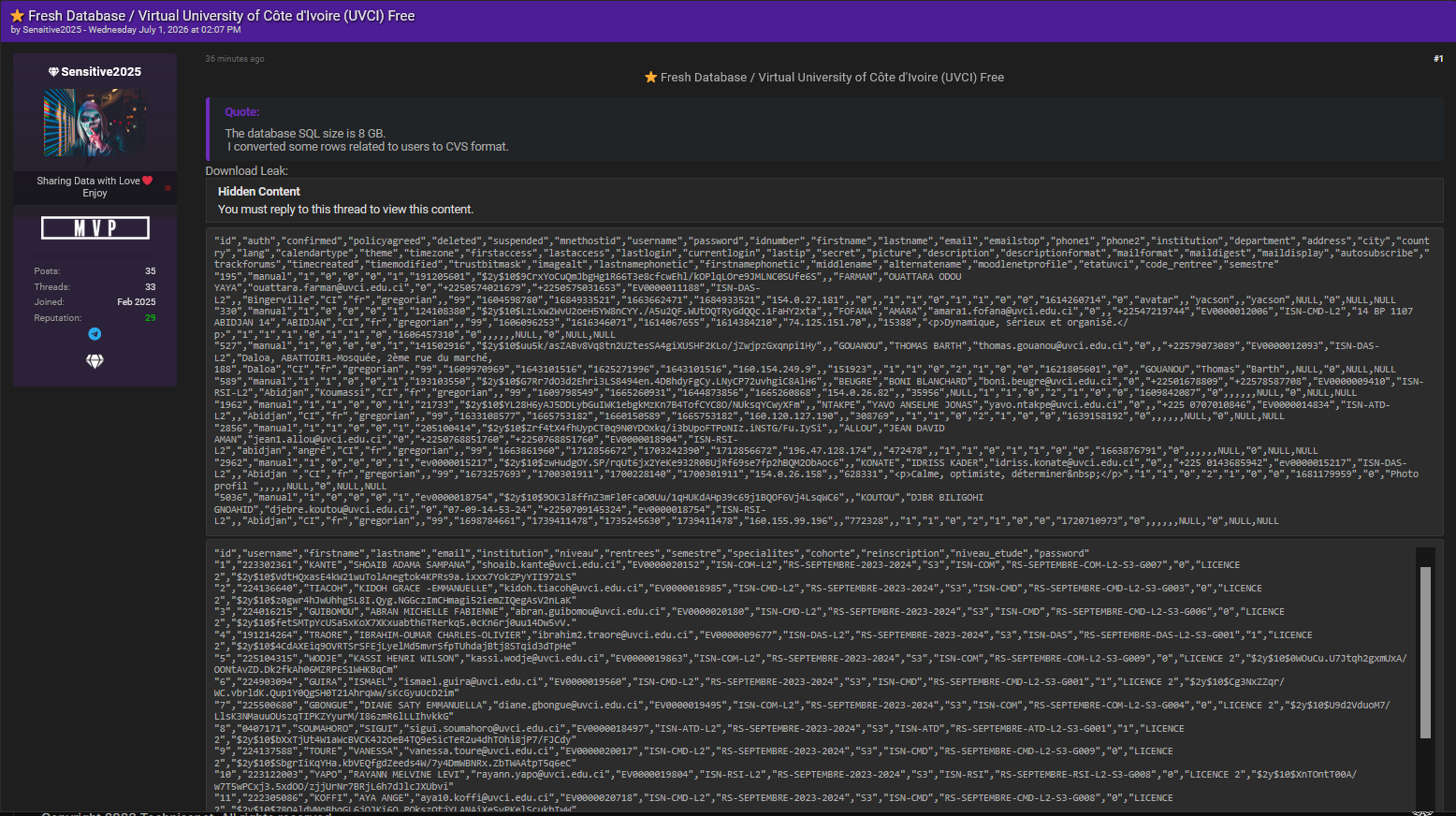
Detecting and validating database compromise attempts requires a combination of log auditing, network monitoring, and behavioral analysis. Security operations centers (SOCs) should implement specific detection logic to catch database probing and exfiltration activities before data is fully exfiltrated. First, web server logs for public applications must be audited for suspicious patterns. Security teams should look for frequent SQL query syntax in URL parameters, unauthorized POST requests to sensitive endpoints, or high-frequency requests originating from known TOR exit nodes or VPNs. Automated scanning attempts often generate distinct user-agent signatures that can be flagged by web application firewalls (WAF). Second, database access logs must be actively monitored for anomalous administrative queries. Actions such as downloading entire user tables, copying massive datasets, or launching native database backup commands should trigger high-priority alerts. If these activities occur outside of scheduled maintenance windows or originate from non-standard IP addresses, they must be treated as active exfiltration attempts. Third, network teams must monitor for unusual outbound data spikes. An 8 GB compressed RAR archive represents a significant volume of data. Setting network thresholds that alert on gigabyte-scale outbound connections to unrecognized external IP addresses can allow teams to interrupt exfiltration in real time.
Mitigation and Defensive Strategies
To protect complex environments from database exfiltration, organizations must adopt a defense-in-depth posture. Rather than relying solely on perimeter defenses, security teams should focus on isolating databases, validating inputs, and enforcing the principle of least privilege across all user tiers. Regular security validation is highly recommended to identify code flaws before they are exploited. Performing targeted Vulnerability Assessments ensures that all web application instances, content management systems, and backend servers are running updated, patched software. Additionally, implementing continuous security reviews can help expose logical gaps in application access control. For ongoing credential risk, organizations should utilize advanced security solutions. Integrating Dark Web Monitoring allows enterprise teams to receive real-time alerts whenever corporate credentials, domain names, or critical internal databases are identified on illicit forums. By immediately rotating compromised credentials, security teams can neutralize threat actor access before lateral movement occurs. Finally, enforcing strict database isolation is essential. Databases hosting sensitive user records should never be directly accessible from the public internet. Web application servers should communicate with database instances through isolated network zones, using least-privilege credentials that only allow necessary database transactions rather than full schema administrative rights.