vulnerabilitycritical
New hVNC/hRDP Zero-Day Exploit Markets Surface
Emerging threats involving hVNC and hRDP zero-day exploits are circulating in underground forums. Organizations must assess their exposure and strengthen remote access security.

Emerging threats involving hVNC and hRDP zero-day exploits are circulating in underground forums. Organizations must assess their exposure and strengthen remote access security.
The cybersecurity landscape has shifted as reports indicate the sale of a purported zero-day exploit targeting hVNC and hRDP protocols. In the modern enterprise, remote access is a primary vector for adversaries, and the emergence of tools that bypass traditional security controls like UAC and administrator privilege requirements poses a significant challenge. This particular exploit is claimed to function without requiring extra drivers while incorporating WebGL-based capabilities, potentially facilitating unauthorized remote interaction with compromised systems while evading standard EDR and antivirus detection mechanisms.
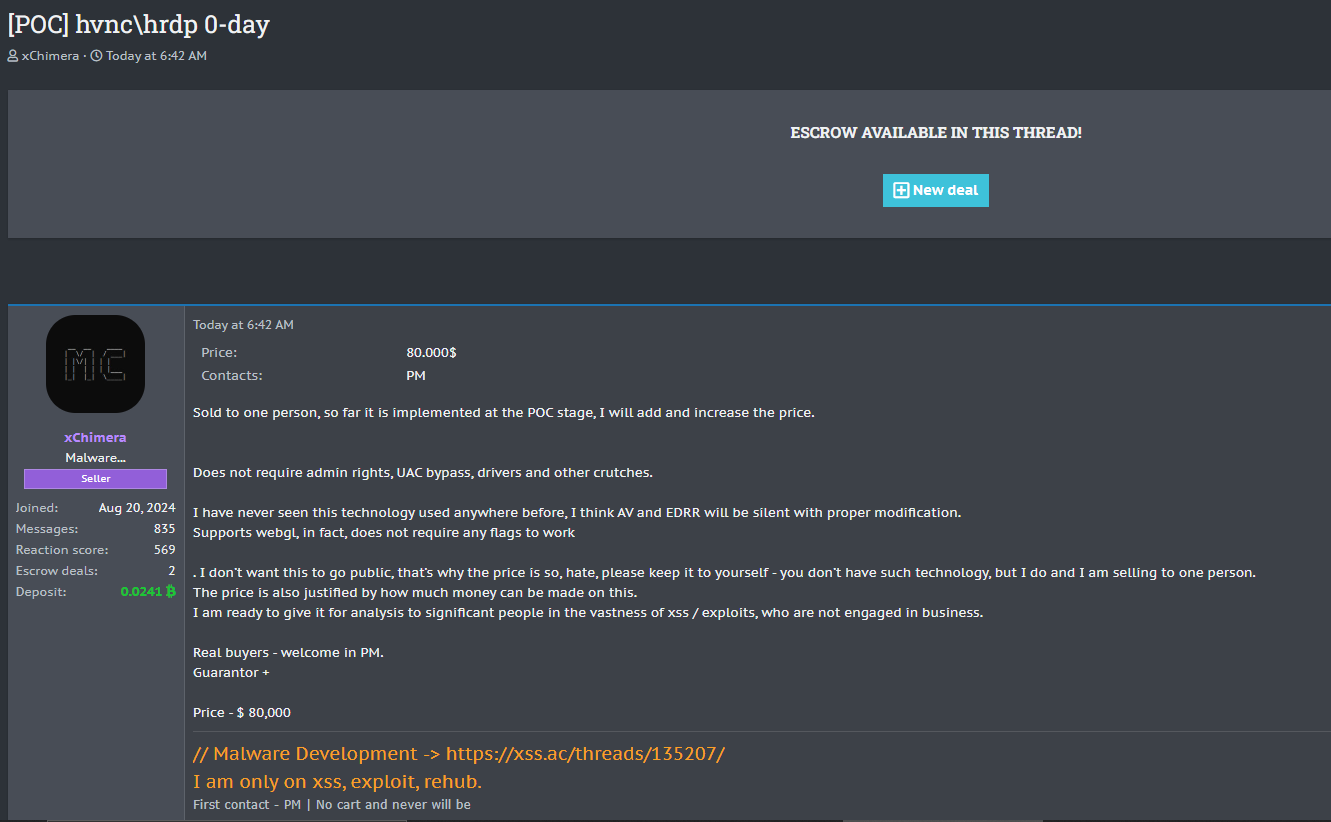
Hidden Virtual Network Computing (hVNC) and Hidden Remote Desktop Protocol (hRDP) tools are prized by threat actors because they allow for stealthy, persistent access to an infected environment. Unlike standard remote administration tools, these implementations are designed to remain invisible to the active user on the machine. By operating at the kernel or system level, the actors behind such exploits can maintain control over infected sessions without triggering common security alerts or prompting the user to acknowledge a remote connection.
For enterprise organizations, this translates to a risk of data exfiltration and long-term surveillance. When an attacker can leverage a zero-day exploit to bypass standard privilege escalations, they effectively shorten the path from initial entry to full system compromise. Organizations should prioritize vulnerability assessments to identify potential entry points and ensure that their infrastructure is not inadvertently exposing sensitive services to the public internet.
Proactive defense in the GCC region requires a departure from reactive patching. Because zero-day exploits target unknown vulnerabilities, traditional signature-based detection is rarely sufficient. Instead, enterprises must adopt a multi-layered security posture that focuses on identifying unauthorized behavior and unexpected system changes. The potential for this exploit to evade EDR solutions through custom modifications highlights the need for deep, behavioral-based monitoring and continuous attack surface management to reduce the windows of exposure.
Free exposure check
Dark Web Scanner
check dark web mentions, compromised account indicators, malware log signals, public breach exposure, and recent underground market activity for your domain.
In the face of sophisticated threats like zero-day exploits, organizations cannot rely solely on off-the-shelf software. Continuous validation of security controls is necessary. By conducting regular red teaming engagements, your team can simulate how an attacker might attempt to leverage hidden remote tools to gain unauthorized persistence. This level of rigor ensures that even if a new vulnerability is discovered, the surrounding infrastructure remains resilient enough to detect and halt anomalous activity before significant damage occurs.
As we monitor these trends in the dark web, it is clear that adversaries are moving toward tools that provide high-value, low-footprint access. Maintaining an accurate inventory of internet-facing assets and ensuring that all remote access protocols are governed by strict zero-trust principles is no longer optional. Secure your operations by evaluating your current exposure and taking steps to harden your endpoints against emerging exploit chains.
If your team may be exposed to a similar threat, FemtoSec can help validate blast radius, prioritize remediation, and connect the issue to a practical security program.

June 11, 2026
A threat actor claims to possess advanced zero-day exploits and attack techniques targeting network infrastructure and browsers. We analyze the implications for enterprises.

June 21, 2026
A threat actor is reportedly offering a malware framework exploiting vulnerabilities in libsodium and NaCl. We analyze the risks to enterprise cryptographic integrity and provide mitigation steps.

A threat actor has claimed discovery of a zero-day vulnerability in the WP User Frontend plugin, putting sensitive user data and PII at risk. We analyze the implications for enterprise security and provide mitigation steps.