HeartSender V6 Leaked: Risks to Email Security
The emergence of the HeartSender V6 platform leak highlights the ongoing risks of mass-email delivery tools in the wild. We analyze the implications and provide defensive strategies.
Key Takeaways
- HeartSender V6, a platform for large-scale email delivery, has been leaked, potentially increasing the volume of phishing attempts.
- The availability of such tools empowers less sophisticated actors to execute complex social engineering campaigns.
- Enterprises should prioritize email authentication and user training to mitigate these risks.
Understanding the HeartSender V6 Exposure
Recent intelligence indicates that data associated with HeartSender V6, a platform allegedly developed for large-scale email and phishing campaigns, has been leaked. For enterprise security teams, this development signals a potential shift in the availability of tooling that lowers the barrier to entry for malicious actors looking to orchestrate high-volume phishing attacks.
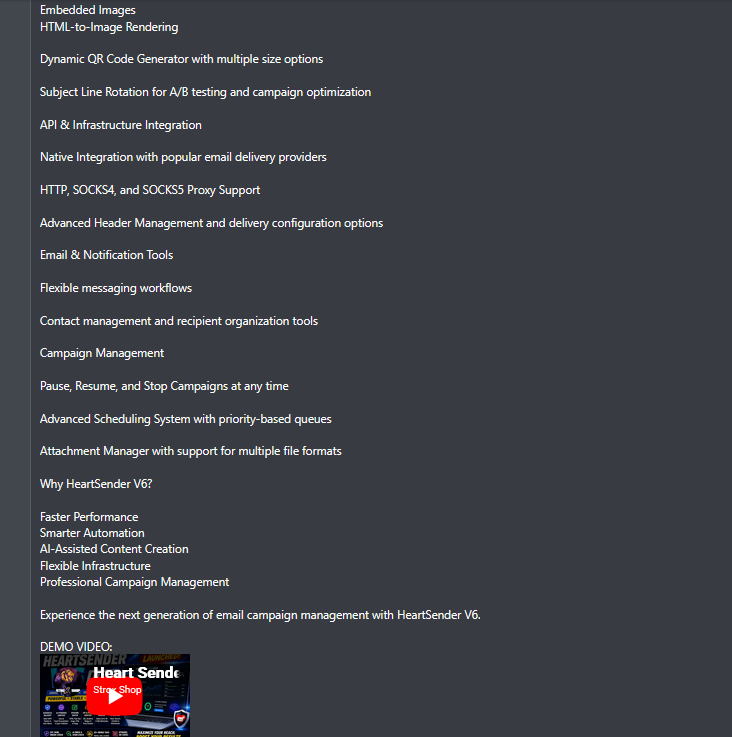
While HeartSender V6 was marketed as a mass-email delivery tool, its application in illicit operations poses significant risks to organizational inboxes. Understanding the reach of such tools is essential for maintaining a resilient security posture. Enterprises that rely heavily on email for communication must be aware that the democratization of these capabilities often results in an increase in the volume and sophistication of social engineering attempts.
The Impact on Defensive Operations
When mass-email delivery platforms enter the public domain, the immediate consequence is an uptick in opportunistic phishing. Attackers often leverage these tools to bypass standard spam filters or to automate the delivery of malicious content to thousands of recipients simultaneously. This underscores the need for robust Security Awareness Training to ensure that end-users remain the last line of defense against deceptive content that reaches their inbox.
Furthermore, organizations must look beyond perimeter defenses. A proactive approach involves continuous Attack Surface Management to identify how your domain reputation is being handled and to detect if your organization is being impersonated in active phishing campaigns.
Why Strategy Matters More Than Ever
The leak of specialized tools like HeartSender V6 is a reminder that adversaries are continuously improving their technological arsenal. Relying on static email filtering is no longer sufficient. Security teams must transition to a model that emphasizes behavioral analysis and intelligence-led defense. Femto Security specializes in helping enterprises in the GCC region fortify their defenses against such threats. By integrating advanced offensive security and Dark Web Monitoring, we help you detect threats before they manifest as a full-scale compromise.
Practical Steps for Mitigation
To mitigate the risks posed by mass-email tools, organizations should implement the following measures:
Enhance Email Authentication: Ensure that SPF, DKIM, and DMARC records are strictly configured to prevent spoofing.
User Vigilance: Conduct regular simulations to test user readiness against sophisticated phishing lures.
Infrastructure Hardening: Periodically conduct a Penetration Testing engagement to uncover how your network and applications might be exposed if a user were to click on a malicious link.
Threat Hunting: Utilize intelligence feeds to monitor for indicators of compromise related to emerging phishing toolkits.
The threat landscape is dynamic, but your security strategy does not have to be reactive. By maintaining a clear view of your exposure, you can anticipate attacker movements and ensure that your enterprise remains resilient, regardless of the tools available to malicious actors.
How to Defend Against Similar Threats
- Review and harden SPF, DKIM, and DMARC configurations.
- Implement recurring phishing simulation exercises.
- Monitor for indicators of domain impersonation.
Threat Intel FAQ
What is HeartSender V6?
How can I protect my organization from phishing tools like this?
Could a similar threat affect your organization?
If your team may be exposed to a similar threat, FemtoSec can help validate blast radius, prioritize remediation, and connect the issue to a practical security program.
Related Threats
Threat actors are distributing advanced phishing and credit card harvesting toolkits designed to exploit payment gateways. Learn how these threats impact your enterprise and how to defend your infrastructure.
A recently identified phishing toolkit targeting Gmail users is making rounds on underground forums. This tool facilitates automated credential harvesting and proxy-based obfuscation, posing a significant risk to organizational security.
June 30, 2026
Bluekit PhaaS Targets E-Commerce with AiTM Attacks
A deep dive into the Bluekit and SnagX Phishing-as-a-Service platforms, analyzing how threat actors utilize Adversary-in-the-Middle reverse proxies to bypass multi-factor authentication and execute automated account takeovers targeting e-commerce credentials.