KTR Real Estate Advisors Targeted by ANUBIS Ransomware
KTR Real Estate Advisors has suffered a significant data compromise, with 206 GB of financial records and proprietary architectural data exfiltrated by the ANUBIS ransomware group.
Key Takeaways
- The ANUBIS ransomware group exfiltrated 206 GB of data from KTR Real Estate Advisors.
- Stolen data includes sensitive tax records, financial information, and proprietary architectural drawings.
- Real estate firms are increasingly targeted due to the high value and sensitive nature of their intellectual property.
- Large-scale exfiltration often indicates prolonged adversary dwell time and lateral movement within the network.
Incident Overview
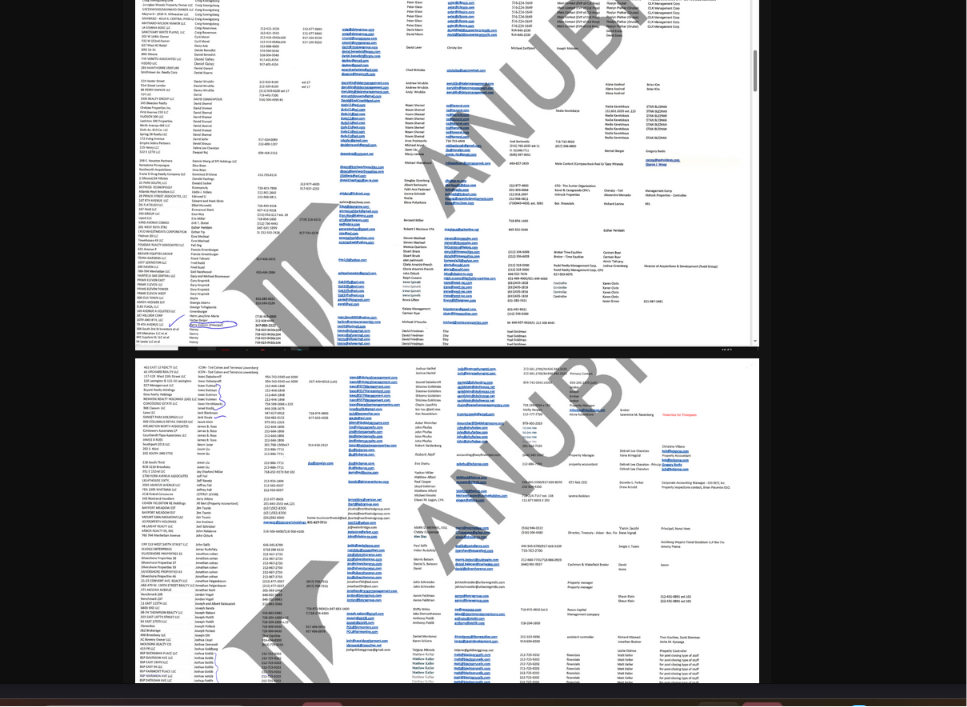
KTR Real Estate Advisors has become the latest target of the ANUBIS ransomware collective, resulting in the alleged exfiltration of 206 GB of sensitive organizational data. The compromised information spans a wide range of critical assets, including financial records, tax documents, and proprietary data related to client properties, such as detailed architectural drawings and floor plans. This incident highlights the growing risk to the real estate sector, where high-value, non-public intellectual property and sensitive financial data make organizations attractive targets for extortion.
For enterprises managing large volumes of sensitive client data, this breach serves as a stark reminder of the necessity for proactive defenses. Understanding your security posture before an adversary finds an opening is critical. If your domain is currently exposed, use FemtoSec's Dark Web Scanner to check dark web mentions, compromised account indicators, malware log signals, public breach exposure, and recent underground market activity for your domain.
Technical Context and Risk Implications
Ransomware groups like those deploying ANUBIS typically focus on initial access vectors such as vulnerable edge devices, phished credentials, or unpatched software supply chain components. Once initial access is established, the adversary often moves laterally to identify sensitive data repositories. In the case of a real estate firm, the presence of floor plans and tax records suggests the exfiltration likely targeted centralized file servers or cloud storage environments that were poorly segmented.
The exfiltration of 206 GB represents a significant volume of data, indicating that the attackers likely maintained persistence within the network for an extended period. This dwell time is often used to map the internal network and locate the most sensitive data silos, which are then exfiltrated to increase leverage during extortion. For defenders, identifying anomalous egress traffic and suspicious lateral movement between workstations is paramount to preventing such large-scale data loss.
The Importance of Offensive Validation
Organizations often rely on legacy security perimeters that struggle to contain modern ransomware threats. Engaging in continuous Penetration Testing is an essential step to identifying where your architecture fails against real-world attack simulations. By testing your infrastructure under conditions that mirror current adversary tactics, you can uncover hidden vulnerabilities, misconfigurations, and weak access controls that allow ransomware actors to gain a foothold. Similarly, assessing your Attack Surface Management helps ensure that no shadow IT, forgotten subdomains, or misconfigured cloud assets are serving as entry points for unauthorized actors.
Remediation and Resilience
Resilience in the face of a ransomware incident is not just about recovery; it is about reducing the probability of impact. This requires a multilayered defense strategy:
Identity Hygiene: Implementing strict multi-factor authentication across all external-facing services to mitigate the risk of credential-based entry.
Network Segmentation: Ensuring that financial systems and intellectual property repositories are isolated from general business traffic to slow down lateral movement.
Data Monitoring: Employing behavioral analytics to detect unusual file access patterns or mass data exfiltration attempts.
Supply Chain Verification: Regularly auditing third-party software and vendors to ensure that vulnerabilities in the supply chain do not propagate to your internal environment.
For firms looking to strengthen their defenses, prioritizing a proactive operating model is the most effective way to stay ahead of evolving threats like ANUBIS. By hardening your external posture and maintaining visibility into your exposure, you can drastically reduce the window of opportunity for attackers.
How to Defend Against Similar Threats
- Conduct a thorough audit of all edge devices and external-facing infrastructure to close potential entry points.
- Enforce strict multi-factor authentication across all organizational and cloud-based applications.
- Implement network segmentation to separate critical financial data from general corporate systems.
- Deploy advanced behavioral analytics to monitor for abnormal file access and data egress patterns.
- Schedule periodic red teaming exercises to simulate ransomware tactics and identify defensive gaps.
Threat Intel FAQ
What kind of data was exposed in the ANUBIS ransomware attack?
How can an enterprise protect itself against ransomware groups like ANUBIS?
Could a similar threat affect your organization?
If your team may be exposed to a similar threat, FemtoSec can help validate blast radius, prioritize remediation, and connect the issue to a practical security program.
Related Threats

An investigation into the Aur0ra ransomware incident affecting ALS Global. We break down the risks associated with the exfiltrated administrative and financial data.
ANUBIS ransomware has targeted Quest Health Solutions, exfiltrating 239 GB of sensitive operational data. Operating under a dual-threat encryption and wiping model, this Go-based malware poses severe risks to healthcare infrastructure. Explore the technical attack chain, SIEM detection rules, and containment steps.

June 27, 2026
Redact Ransomware Exfiltrates 145 GB of FCCI Data
The Redact ransomware group, an extortion-only offshoot linked to UNC6671, has targeted FCCI Insurance Group, stealing 145 GB of corporate data. The group bypassed multi-factor authentication by utilizing advanced voice phishing (vishing) and session hijacking to execute automated cloud-to-cloud data extraction.