VARA Dubai Compliance Guide: Key Regulations Every Crypto Business Must Know
Dubai has rapidly emerged as a global hub for finance, technology and innovation. With the rise of blockchain and digital assets, the need for robust regulatory frameworks has never been greater. The Virtual Asset Regulatory Authority (VARA) is Dubai’s answer, ensuring secure, transparent and compliant operations in the digital asset sector.
In this blog, we explore VARA Dubai, the key VARA regulations and steps businesses can take to achieve compliance while strengthening their cybersecurity posture.
What is VARA Dubai?
The Virtual Asset Regulatory Authority (VARA) was established to oversee all digital asset activities in Dubai, including crypto exchanges, token issuance and smart contracts. VARA Dubai’s primary goals are to protect investors, enforce transparency and support innovation in digital finance.
Compliance with VARA Dubai regulations is mandatory for businesses operating in the virtual asset ecosystem, helping organizations mitigate legal, financial and cybersecurity risks. Companies can benefit from expert guidance through services like VCISO for VARA compliance to implement robust regulatory and security frameworks.
Key VARA Dubai Regulations Every Business Should Know
Understanding VARA regulations is essential for all digital asset service providers (VASPs). These regulations ensure operational integrity, cybersecurity and legal compliance. Here are the main pillars:
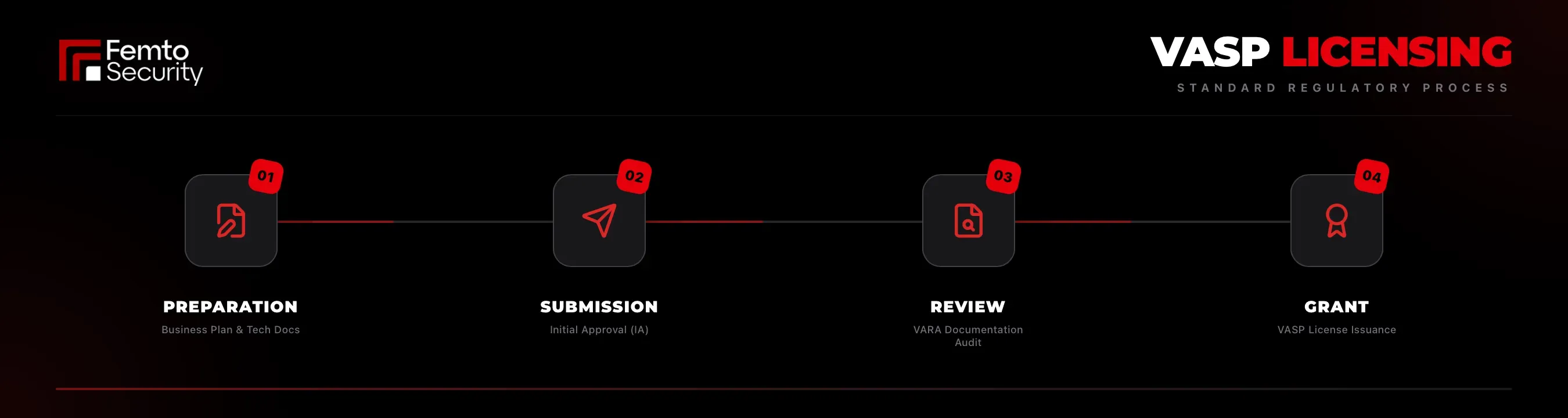
1. Licensing and Registration
All VASPs must obtain a license from VARA before operating in Dubai. Licensing validates that businesses meet operational, financial, and cybersecurity standards. This regulatory oversight increases investor confidence and ensures safe market operations.
2. Cybersecurity Requirements
Cybersecurity is a critical component of the VARA Dubai regulations. Businesses must protect digital assets from unauthorized access and cyberattacks. Recommended measures include penetration testing and attack surface management to identify and mitigate vulnerabilities.
3. Anti-Money Laundering (AML) and KYC
VARA regulations mandate stringent AML and Know Your Customer (KYC) protocols. Businesses are required to verify client identities, monitor transactions for suspicious activity, and maintain accurate records to ensure compliance and protect investor trust. Explore enterprise cybersecurity solutions for comprehensive AML and KYC implementation.
4. Smart Contract Compliance
Smart contracts are integral to blockchain operations. VARA Dubai regulations require smart contracts to be audited for security and regulatory compliance. This minimizes the risk of exploits and enhances operational transparency. Leverage smart contract auditing services to ensure contracts are secure and compliant.

Why VARA Compliance Matters for Digital Asset Security
Achieving compliance with VARA regulations is not just a legal requirement it is a strategic advantage. Key benefits include:
Building Investor Trust – Compliance demonstrates to investors that your business operates transparently and securely.
Reducing Cybersecurity Risks – Aligning with VARA Dubai regulations strengthens defenses and mitigates threats.
Global Expansion Opportunities – VARA compliance increases credibility with international partners.
Enhanced Operational Resilience – Compliance drives governance, risk management, and incident response capabilities.
Strengthen cybersecurity with dark web monitoring services.
Key VARA Compliance Facts
Compliance Area | Requirement | Recommended Service |
|---|---|---|
Licensing & Registration | Obtain VARA license before operation | Femtosec Compliance Services |
Cybersecurity | Penetration testing, vulnerability management | Femtosec Penetration Testing & Red Teaming |
AML & KYC | Verify client identities, monitor transactions | Enterprise Security Solutions |
Smart Contracts | Auditing for security and regulatory compliance | Smart Contract Auditing |
Continuous Monitoring | Regular audits, threat detection, and risk assessment | VCISO for VARA Compliance |
Steps to Achieve VARA Dubai Compliance
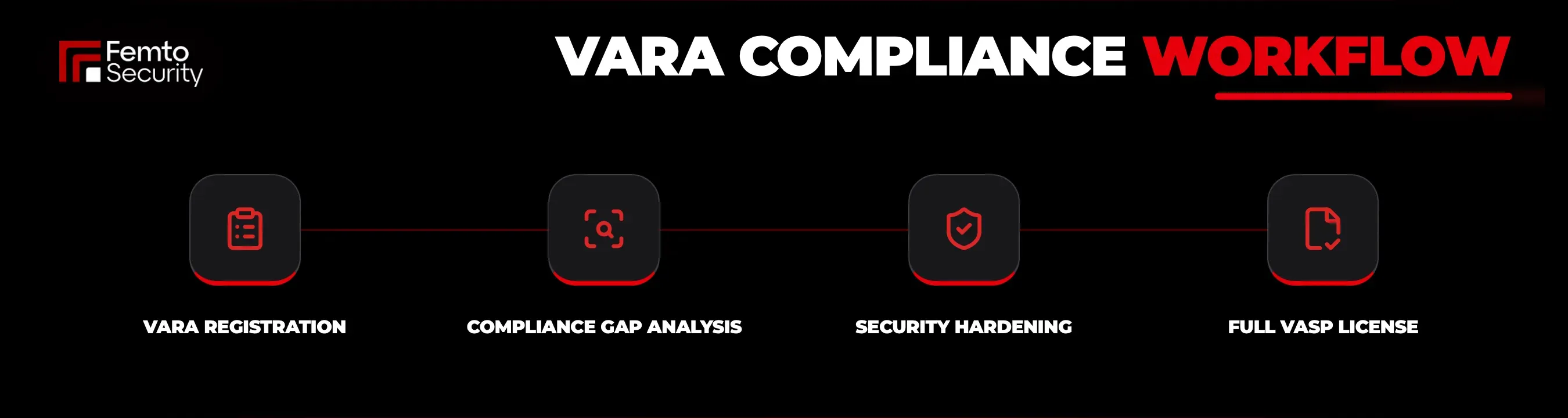
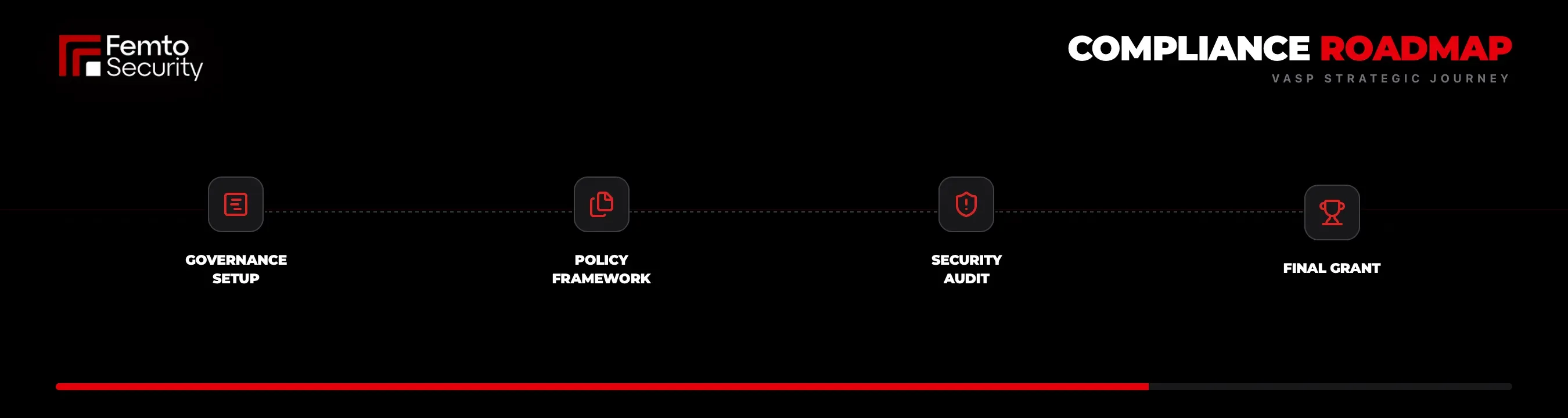
Businesses can achieve VARA compliance through a structured approach combining cybersecurity, governance and regulatory alignment:
1. Conduct a Compliance Assessment
Begin by assessing your current adherence to VARA Dubai regulations. Services like Femto security compliance services help identify gaps in governance, licensing and cybersecurity.
2. Implement Cybersecurity Frameworks
Adopt international standards such as ISO 27001 to strengthen information security and ensure alignment with VARA cybersecurity requirements.
3. Strengthen Threat Detection
Continuous monitoring helps detect threats early. Services like dark web monitoring alert organizations to leaked credentials, cyber threats and vulnerabilities before they escalate.
4. Regular Penetration Testing
Routine penetration testing and vulnerability assessments help identify weaknesses and ensure security measures meet VARA requirements.
5. Adopt Enterprise and Government Security Measures
Whether operating in the public or private sector, VARA compliance is supported by tailored security measures, including enterprise and government solutions that enhance risk management and governance.
6. Continuous Compliance Monitoring
Compliance is an ongoing process. Engaging a vCISO for VARA compliance provides continuous oversight, policy updates and risk management aligned with evolving VARA regulations.
Enhancing Security with VARA-Aligned Services
VARA compliance requires robust cybersecurity measures. Key services include:
Attack Surface Management – Continuous monitoring of your digital footprint.
Red Teaming – Simulate attacks to identify security gaps.
Smart Contract Auditing – Validate blockchain contracts for compliance and security.
Security Awareness Training – Train teams to identify and respond to cyber threats.
The Role of Cybersecurity in VARA Dubai Compliance
Cybersecurity plays a central role in maintaining compliance with VARA Dubai regulations, especially for companies handling digital assets, crypto exchanges, tokenized platforms, and blockchain-based financial services. Because digital assets operate in decentralized environments, they are prime targets for hackers, fraudsters and sophisticated cybercriminal networks.
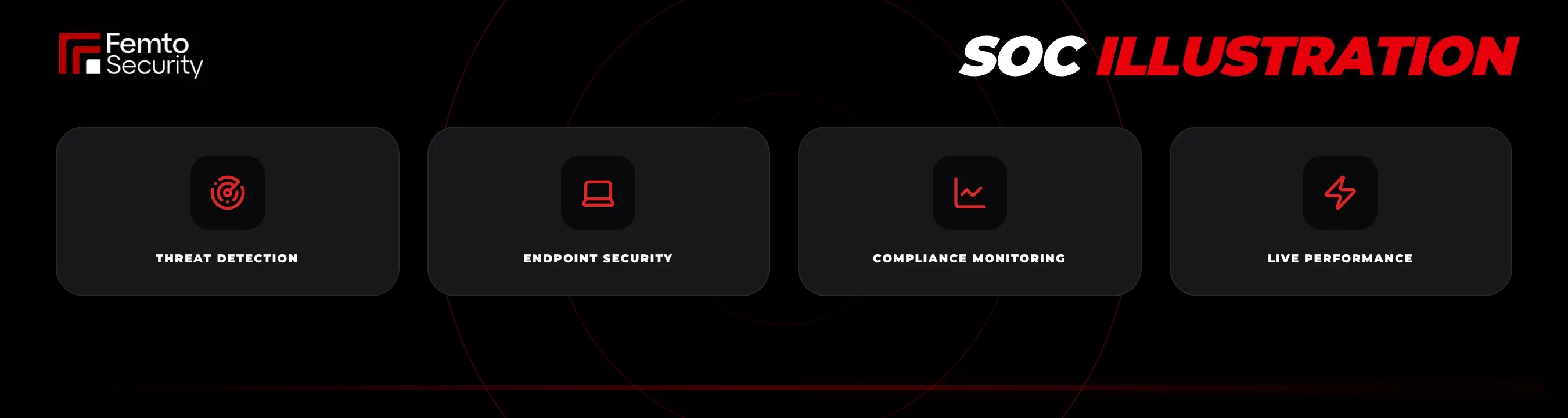
Organizations operating under VARA regulations must implement security frameworks capable of identifying vulnerabilities, preventing unauthorized access and ensuring the security of transactions across blockchain infrastructure. One of the most effective strategies is performing regular security assessments through vulnerability assessments to identify weak points before attackers can exploit them.
Why Digital Asset Companies Must Prioritize Security
The global crypto ecosystem has lost billions of dollars to cyberattacks, phishing campaigns, and smart contract exploits. For this reason, VARA Dubai emphasizes proactive security strategies that go beyond basic compliance.
Companies must continuously monitor their systems, networks and blockchain environments to detect potential threats before they escalate into major breaches. Security teams should adopt intelligence-driven monitoring strategies, such as dark web monitoring services, to detect stolen credentials or leaked company data circulating on underground cybercrime marketplaces.
Understanding the VARA Compliance Framework
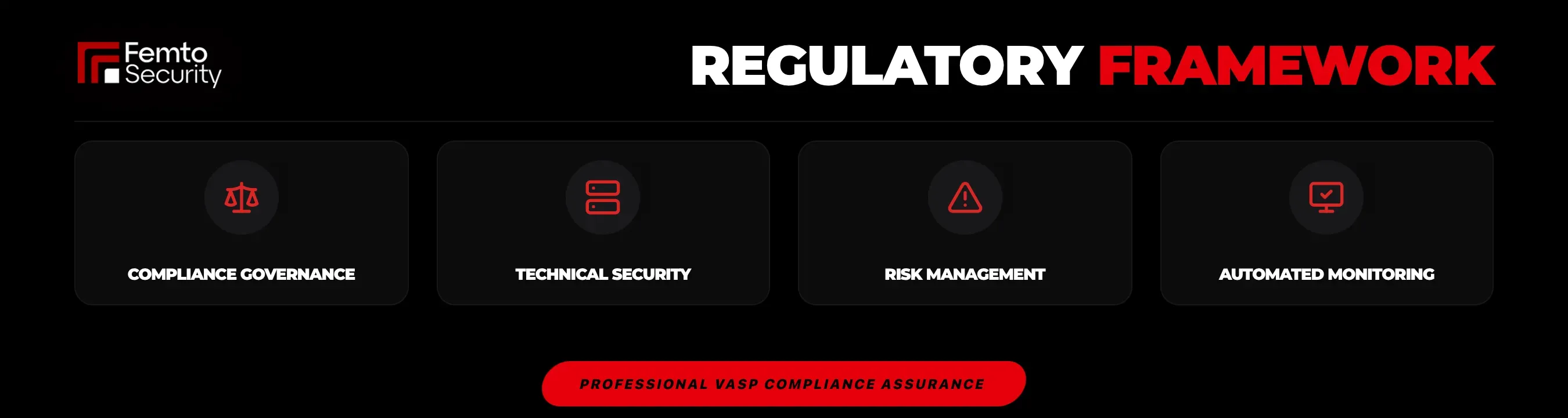
The compliance framework introduced by VARA Dubai regulations is designed to standardize digital asset governance and ensure transparency within Dubai’s crypto ecosystem. The framework focuses on governance, operational security, financial transparency and customer protection.
Businesses operating under VARA must demonstrate strong internal policies, risk management procedures and cybersecurity controls. A deeper understanding of this framework can be found in The VARA Framework Explained, which explores how Dubai is shaping the future of secure digital asset markets.
Key Security Requirements Under VARA Regulations
Security Domain | Requirement | Purpose |
|---|---|---|
Identity Management | Implement strong authentication systems | Prevent unauthorized access |
Network Security | Continuous monitoring and threat detection | Reduce cyberattack risks |
Smart Contract Security | Mandatory auditing processes | Prevent vulnerabilities in blockchain contracts |
Data Protection | Encryption and secure storage | Protect sensitive customer information |
Incident Response | Rapid response protocols | Minimize damage during cyber incidents |
Organizations implementing these controls often benefit from specialized services such as red teaming security testing that simulate real-world cyberattacks.
VARA Dubai and the Future of Crypto Regulation
Dubai has positioned itself as one of the first global jurisdictions to establish a dedicated regulatory authority for digital assets. Through VARA Dubai, the emirate aims to create a balanced environment where innovation and regulation coexist.
Unlike traditional financial regulations, VARA regulations are designed specifically for emerging blockchain technologies, decentralized finance platforms, NFTs and tokenized ecosystems. Businesses entering the UAE market should review compliance guidelines carefully, which are discussed in detail in VARA Compliance Services UAE.
Attack Surface Risks in Crypto Businesses
Digital asset companies often operate across multiple platforms, including mobile applications, trading interfaces, APIs, cloud infrastructures, and blockchain nodes. Each component increases the organization’s attack surface, giving cybercriminals more entry points.
Under VARA Dubai regulations, organizations must actively manage these risks by identifying exposed systems and reducing vulnerabilities across their digital infrastructure. One effective strategy is implementing attack surface management to continuously monitor external-facing assets.
Security Awareness: The Human Factor in VARA Compliance
While advanced cybersecurity tools are essential, human error remains one of the most common causes of security breaches. Employees may unknowingly expose systems through phishing attacks, weak passwords, or unsafe digital behavior.
To address this risk, companies operating under VARA regulations must invest in cybersecurity awareness programs that train employees to identify and respond to threats effectively. Organizations can strengthen internal security culture through security awareness training programs.
Real-World Security Threats Facing VARA-Regulated Companies
Companies working within the VARA Dubai ecosystem face a variety of cyber threats. These include ransomware attacks, credential theft, crypto wallet compromises, phishing campaigns, and smart contract exploits.
Cybercriminals often target exchanges and blockchain platforms due to the high financial value stored within these systems. To counter these risks, organizations must adopt proactive testing strategies such as those explained in Red Teaming Explained.
Common Cyber Threats in the Digital Asset Industry
Threat Type | Description | Impact |
|---|---|---|
Phishing Attacks | Fake login portals targeting crypto users | Account compromise |
Smart Contract Exploits | Bugs in blockchain code | Financial losses |
Exchange Hacks | Attacks targeting trading platforms | Asset theft |
Insider Threats | Employees misusing access privileges | Data leaks |
Malware & Stealers | Malicious software targeting wallets | Credential theft |
How Femto Security Helps Organizations Achieve VARA Compliance
Achieving compliance with VARA Dubai regulations requires a combination of regulatory expertise, cybersecurity infrastructure, and continuous monitoring. Many organizations partner with specialized cybersecurity providers to meet these requirements efficiently.
Femtosec offers comprehensive services tailored to digital asset companies operating in Dubai. These include compliance consulting, penetration testing, threat monitoring, and strategic cybersecurity leadership. Businesses can explore these capabilities through Femto Security enterprise cybersecurity solutions.
Strategic Benefits of VARA Compliance
Organizations that successfully implement VARA regulations gain several long-term benefits beyond regulatory approval. Compliance strengthens security posture, builds customer trust, and opens opportunities in global crypto markets.
Some strategic advantages include:
Increased credibility with investors and partners
Stronger protection against cyber threats
Improved operational resilience
Better access to international markets
Businesses seeking to strengthen their regulatory and security posture can explore insights in VARA Dubai.
Conclusion
VARA Dubai represents a forward-thinking approach to digital asset regulation, combining investor protection, cybersecurity and operational governance. Compliance with VARA regulations is not only a legal requirement but also a strategic advantage, enhancing credibility, security and business growth.
Organizations can leverage specialized services such as penetration testing, dark web monitoring, smart contract auditing and VCISO to support VARA compliance and meet regulatory standards while building resilient, secure and trustworthy digital asset operations.
Frequently Asked Questions (FAQs)
1. What is VARA Dubai?
VARA Dubai (Virtual Asset Regulatory Authority) is the regulatory body responsible for overseeing virtual asset activities in Dubai. It regulates crypto exchanges, blockchain platforms, token issuance, digital wallets and other virtual asset services to ensure transparency, investor protection and secure operations for digital assets.
The authority was created to establish Dubai as a global hub for blockchain innovation while maintaining strong cybersecurity and compliance standards. Businesses operating in the digital asset ecosystem must comply with VARA regulations to legally provide services in the region.
Organizations seeking structured guidance can explore vciso for vara compliance to implement security and compliance strategies aligned with regulatory requirements.
2. Why are VARA regulations important for crypto businesses?
VARA regulations provide a structured legal and security framework for companies operating in the digital asset ecosystem. These rules ensure that crypto platforms maintain strong governance, financial transparency and cybersecurity standards.
Without regulatory oversight, digital asset markets can become vulnerable to fraud, hacking and financial instability. By complying with VARA Dubai regulations, companies demonstrate credibility, protect customer assets and strengthen investor confidence.
Businesses can improve their security posture through proactive testing methods such as penetration testing, which helps identify vulnerabilities before attackers exploit them.
3. Who must comply with VARA Dubai regulations?
Any company providing virtual asset services in Dubai must comply with VARA Dubai regulations. This includes:
Crypto exchanges
Token issuers
Blockchain platforms
Crypto custodians
NFT marketplaces
DeFi service providers
These organizations must obtain regulatory approval, implement cybersecurity measures and comply with applicable compliance guidelines to operate legally in Dubai’s digital asset market.
Companies looking to assess their compliance readiness can leverage compliance services to identify regulatory gaps and strengthen their security framework.
4. What cybersecurity measures are required under VARA regulations?
Cybersecurity is a critical component of VARA regulations, especially for businesses managing digital assets and blockchain transactions. Companies must implement measures such as:
Continuous vulnerability assessments
Secure infrastructure monitoring
Encryption and data protection
Incident response planning
Smart contract security testing
These measures help prevent cyberattacks, financial losses and data breaches within digital asset platforms.
Organizations can improve their security posture with services such as vulnerability assessments to detect and remediate system weaknesses before they are exploited.
5. What is the process to obtain a VARA license in Dubai?
To operate legally, businesses must obtain a license from VARA Dubai. The licensing process typically involves several steps:
Business registration and regulatory application
Compliance review and operational assessment
Implementation of cybersecurity and governance frameworks
Risk management and financial evaluation
Final approval and licensing by VARA
Once approved, companies must maintain ongoing compliance and security monitoring to retain their license.
Continue Reading
October 6, 2026
What Is ISO 42001? The Complete AI Management System Guide
Everything about ISO 42001: what it requires, Annex A controls, certification steps, and how it compares with ISO 27001, the EU AI Act, and NIST.
September 24, 2026
VARA Cybersecurity Requirements | What Every VASP Must Do
VARA cybersecurity requirements explained: CISO, annual pen testing, 72-hour incident reporting and key security. Rules vs guidance, and evidence to keep.
September 14, 2026
ISO 9001:2015 vs ISO 9001:2026: What Actually Changed
Discover key changes in ISO 9001:2026 vs ISO 9001:2015. Learn about clause updates, quality culture, ethics, climate change, and the transition timeline.